
bilingual assessment · clinical resources · Arabic–English expertise
Evidence-informed guidance, practical resources and clinical references for speech and language therapists working with bilingual and multilingual clients.
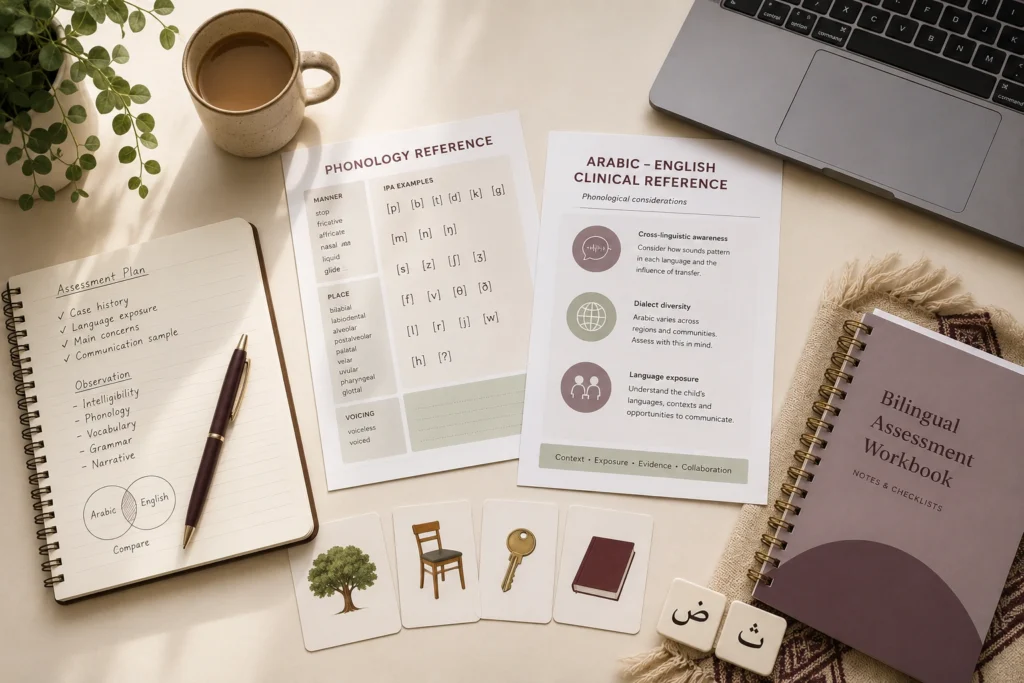
Four areas of practice. Start wherever your caseload takes you today.
01
Assessment guidance, cross-linguistic considerations and tools to support more thoughtful multilingual assessment.
02
Practical therapy resources and intervention materials for bilingual and multilingual clinical work.
03
Quick-reference charts, phonology information, dialect/language-specific material and clinical reference tools.
04
Evidence-informed articles and guidance for multilingual clinical reasoning and practice.
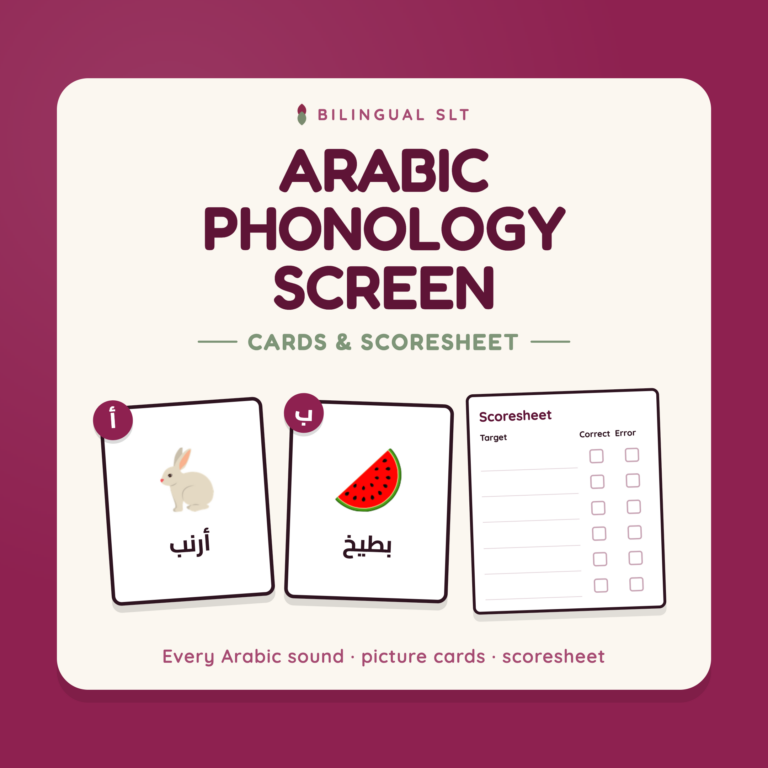
Assess
Picture-naming phonology screen for Arabic-speaking and Arabic–English bilingual children. Includes a pronunciation-guide scoresheet, so you do not need to speak Arabic to administer it.
Arabic · English
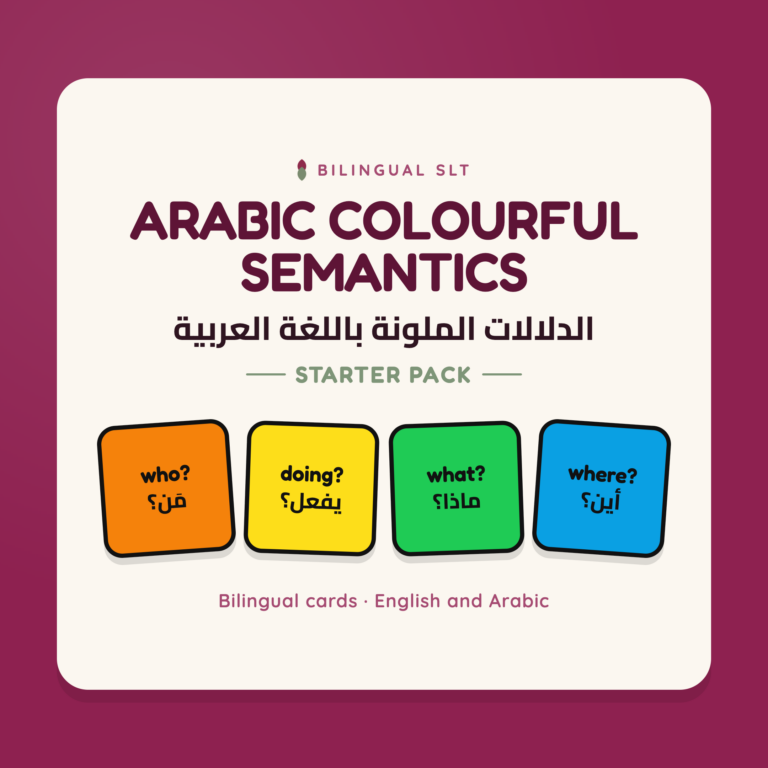
Treat
Sentence-level therapy pack covering Colourful Semantics Levels 2 to 4, with print-ready symbols and sentence strips in both languages.
Arabic · English
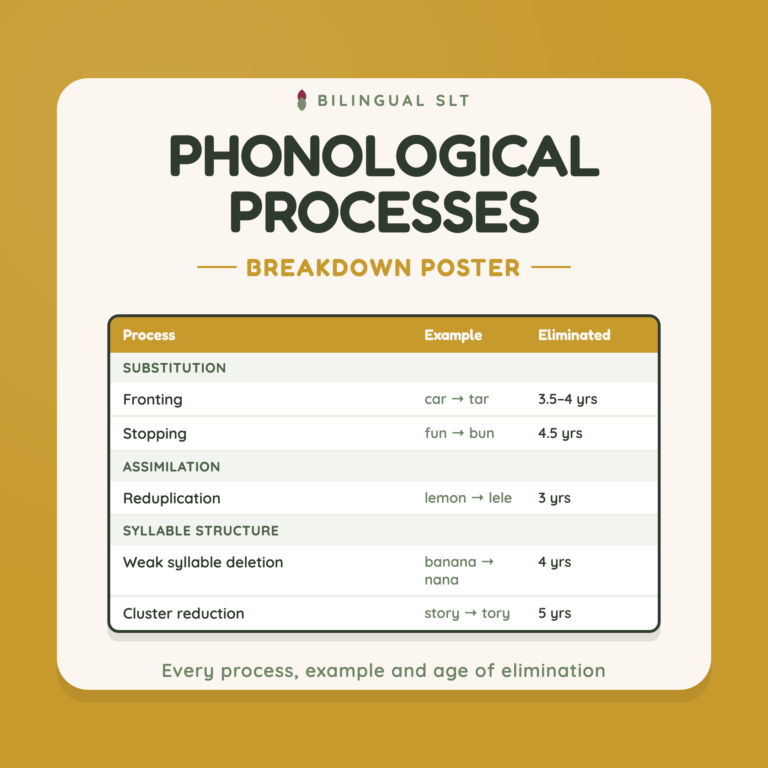
Reference
Reference chart summarising common error patterns and typical ages of elimination, for assessment analysis and report writing.
Language-neutral
Language-specific expertise
Arabic–English bilingualism is an area of particular expertise on this platform — covering phonology, dialect variation, and cross-linguistic influence relevant to assessment and therapy.
Arabic is not a single spoken variety, and resources here are written with that in mind. This focus sits alongside guidance relevant to bilingual and multilingual practice more broadly.
What English milestone charts miss
Emphatic (pharyngealised) consonants
/tˤ/ /dˤ/ /sˤ/ /ðˤ/ — described as one of Arabic’s genuinely distinctive features, with no equivalent in English.
Pharyngeal fricatives
Present in Arabic, absent from the English sound inventory.
Uvular stop
Present in Arabic, absent from the English sound inventory.
/θ/ and /ð/
Familiar from English “think” and “this”, but acquired in a different developmental order.
Dialect-specific references
Per-consonant acquisition and mastery ages, plus dialect-scoring guidance for the APS.
Jordanian and Syrian consonant acquisition tables side by side, with dialect-scoring guidance.
What is and isn’t known about Gulf and Saudi speech sound development, plus a framework for assessing without published norms.
Bilingual assessment
Bilingual assessment
A principle worth holding onto
Language, dialect, cultural background and learning history can influence how communication presents. Those differences should not automatically be interpreted as impairment.
Telling the two apart is rarely straightforward. It depends on what is known about a child’s languages, exposure and communication environments — and on the evidence available for the specific languages and dialects involved, which is not equally developed across all of them.
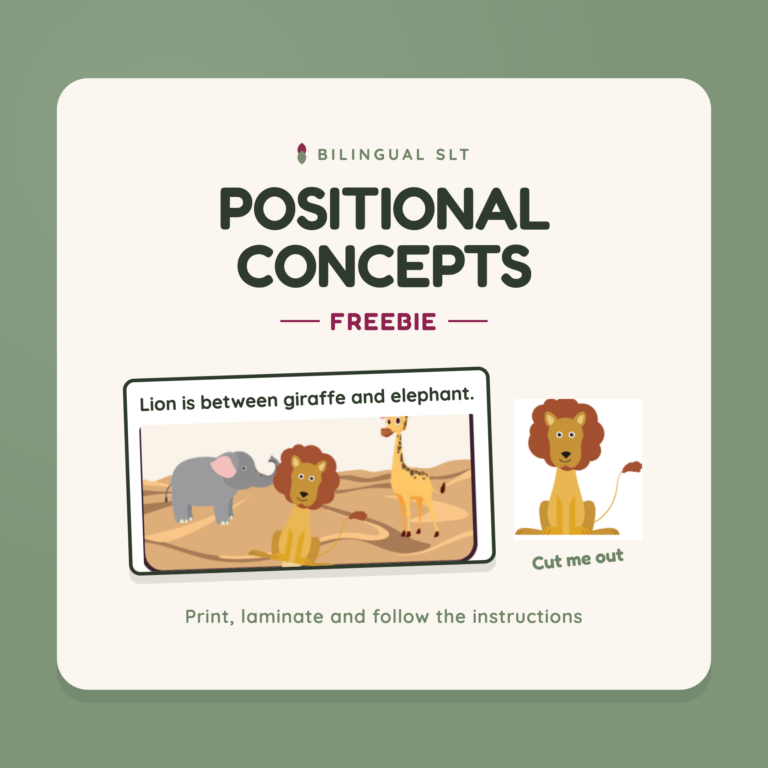
Free clinical resource
A printable activity for practising in, on, under and behind — in Arabic and English. Ready to use in your next session.
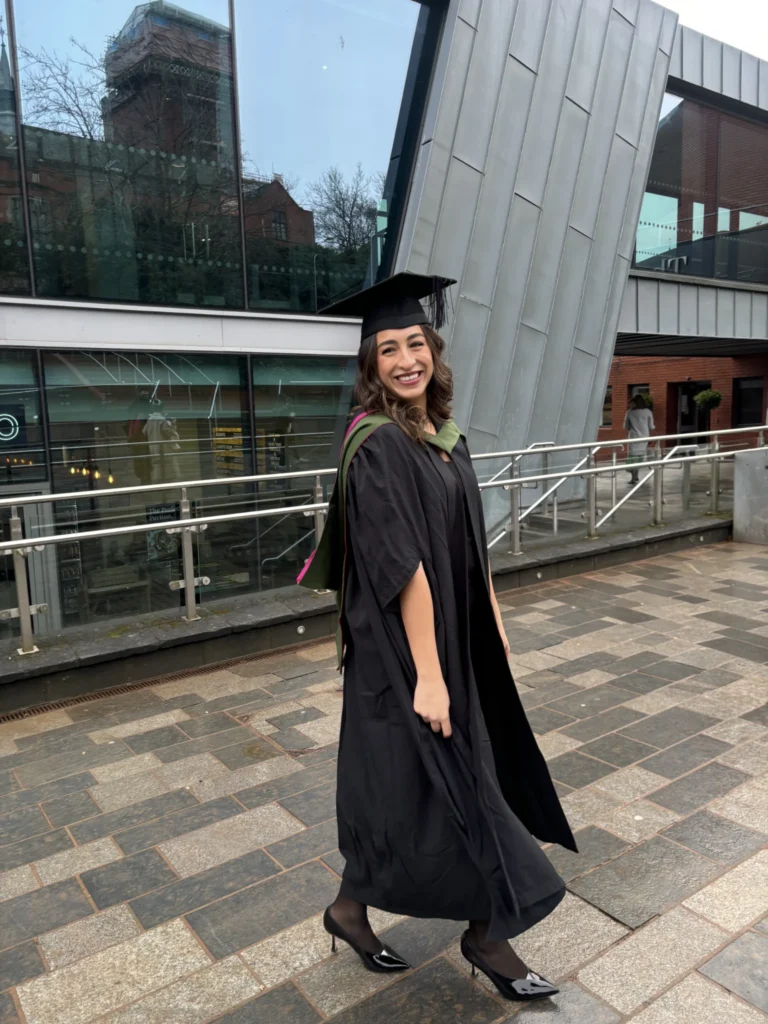
Created from clinical practice
Bilingual SLT is written and led by a practising Speech and Language Therapist with a bilingual Arabic–English perspective and experience across school-based and private caseloads in the UK and international schools in the Middle East.
Resources are developed from genuine clinical needs, with specialist areas in bilingualism, phonology, speech sound disorders and early literacy — and an evidence-informed approach throughout, including a clear note where normative data does not yet exist.